Septic tank and drainfield installation, repair and replacement, with the permits and inspections Florida requires coordinated for you, from the first site visit to the final sign-off.
A septic system treats the wastewater from a building that isn’t connected to a public sewer. Everything that goes down the drains (toilets, showers, sinks, the washing machine) flows to a buried tank, and from there to a drainfield where the soil finishes the treatment.
When a system is installed, sized and maintained correctly it works quietly for years. When it fails, you see slow drains, sewage odors, soggy ground over the drainfield or backups into the house.
Flowlex installs new systems, replaces failed tanks and drainfields, and repairs pipes, baffles and lids.
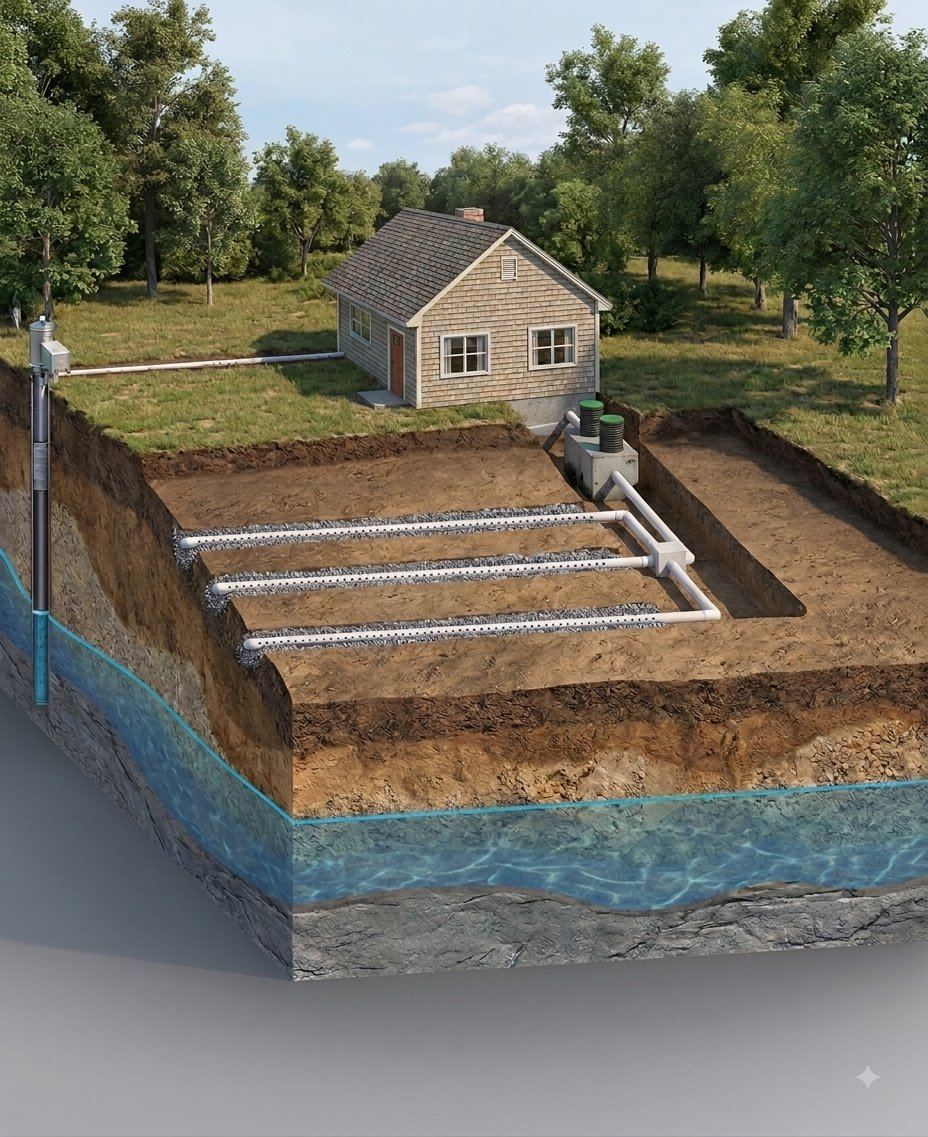
A septic system is one of the most regulated things on a property. Flowlex handles the permit, the inspections and the work, so your system is built the way Florida requires and works for years.
Permit applications, submittals and inspections are prepared and coordinated for you, so nothing stalls between offices.
One team, one schedule and one point of contact from the site visit to the final inspection.
Send your plans, survey or city comments one time. We review them and come back with the next steps.
We follow up by phone or email and explain what your city or county requires, in plain English.
The pipe that carries wastewater from the house to the tank.
A watertight concrete or plastic tank. Solids settle to the bottom, grease and scum float to the top, and the clearer liquid in the middle flows out.
Fittings at the tank inlet and outlet that keep scum and solids in the tank. Many tanks also have an outlet filter.
Access openings so the tank can be inspected and pumped.
A box or pipe network that spreads the liquid evenly over the drainfield.
Perforated pipe or chambers in a bed of soil or aggregate, where the liquid soaks in and the soil completes the treatment.
State rules, county permits, and in Miami-Dade an extra county review.
In Broward and Miami-Dade, septic permits are issued by the Florida Department of Health’s local county health department, which also does the inspections.
Source: Florida DEP: Onsite Sewage FAQ, Permitting · Florida Department of Health in Broward County: Onsite SewageDEP has run the state septic program since July 1, 2021 and sets the statewide rules (Chapter 62-6, F.A.C.). DEP itself issues permits only in the Northwest Florida counties and Marion County.
Source: Florida DEP: Onsite Sewage Program · Florida DEP: Onsite Sewage FAQ, PermittingUnder Ordinance 22-83, conventional (Type 1) systems are no longer allowed for new and total replacement systems in Miami-Dade, DERM reviews them, and every septic system must be registered with DERM.
Source: Miami-Dade County: Onsite Sewage Treatment and Disposal SystemsGeneral principles only. The actual size comes from the permitted design for the property.
The tank and drainfield are sized for the wastewater the building produces. A bigger house or a business produces more.
Solids need time to settle and scum to float. A tank that is too small sends solids out to the drainfield, where they clog it.
The drainfield needs suitable soil and enough distance above the groundwater. That is why a site evaluation is part of the permit application.
Septic systems release treated wastewater into the ground, close to the groundwater many Floridians drink. These are the reasons the state gives for regulating them.
Florida law states that proper management of onsite sewage treatment and disposal systems “is paramount to the health, safety, and welfare of the public,” and that their use must not adversely affect public health or significantly degrade groundwater or surface water.
Source: Section 381.0065, Florida StatutesDEP notes that proper design, construction and maintenance help protect Florida’s ground water, “which provides 90% of the state’s drinking water.” In Miami-Dade, the county explains that the Biscayne Aquifer, only a few feet below the ground surface, is the county’s primary source of drinking water.
Source: Florida DEP: Onsite Sewage Program · Miami-Dade County: Onsite Sewage Treatment and Disposal SystemsDEP’s owner’s guide warns that a failing system may allow untreated sewage to seep into drinking water wells and into water bodies used for drinking and recreation.
Source: Florida DEP: Septic System Owner's Guide (PDF)Under Florida’s Clean Waterways Act of 2020 (Chapter 2020-150, Laws of Florida, signed June 30, 2020), responsibility for the septic program moved from the Department of Health to DEP, effective July 1, 2021. The standards are in Section 381.0065, Florida Statutes, and Chapter 62-6, Florida Administrative Code.
Source: Florida DEP: Onsite Sewage Program Transfer · Florida DEP: Onsite Sewage Program · Florida DEP: Onsite Sewage FAQ, PermittingInstalling, repairing or replacing a septic system in Florida requires a permit and inspection from the state program, handled locally.
Two ways to handle the permit. We can handle the permit process for you, or, if you prefer to do it yourself, here are the official links. Forms are always filed with the city or county, never through Flowlex.
Florida law says a person may not construct, repair, modify, abandon or operate a septic system “without first obtaining a permit.” A construction permit is valid for 18 months after it is issued, and a repair permit for 90 days.
Source: Section 381.0065, Florida StatutesIn Broward, Miami-Dade and Palm Beach Counties, septic permits are issued by the Environmental Public Health Program of the Florida Department of Health’s local county health department. DEP also notes that many counties have local ordinances that may exceed state requirements.
Source: Florida DEP: Onsite Sewage FAQ, PermittingDEP’s contracting FAQ lists who may do septic work in Florida: a septic tank contractor registered with the state, a state-licensed plumber, or a homeowner working on their own owner-occupied single-family home.
Source: Florida DEP: Septic Contracting FAQMiami-Dade County states that conventional septic systems (Type 1) are no longer allowed for new and total replacement systems serving any development in the county, and that all properties served by a septic system must register with the county’s environmental department (DERM).
Source: Miami-Dade County: Onsite Sewage Treatment and Disposal SystemsUnder Florida law, when a public or investor-owned sewer becomes available, the owner of a working septic system must connect within 365 days of written notice from the sewer provider. If the system needs repair, the deadline is 90 days after written notice from DEP.
Source: Section 381.00655, Florida StatutesFlowlex reviews the permit requirements for your property during the site visit, works with the permitting office on your behalf, and schedules the inspections. Permit fees are listed separately in your written price.
Call, send the quote form or message us on WhatsApp with the address and the problem: slow drains, odors, a wet drainfield, a new build.
We find the tank and drainfield, check how the system is working, and look at the lot, access and any records you have.
You get a written scope and price before any work begins. Nothing starts until you accept it.
Once the permit is issued, we excavate, set the tank and build the drainfield to the approved design.
We schedule and attend the required inspections, then backfill, restore the yard and walk the finished job with you.
DEP’s owner’s guide recommends having the tank inspected and pumped every 3 to 5 years by a state-licensed septage disposal service (Florida DEP). Miami-Dade County gives the same 3-to-5-year guidance (Miami-Dade County).
Slow drains, gurgling pipes, sewage odors, soggy or unusually green ground over the drainfield, and backups into the house. If you see any of these, have the system checked before the problem spreads.
Yes. Florida law requires a permit before a septic system is built, repaired, modified or abandoned (s. 381.0065, F.S.). In Broward, Miami-Dade and Palm Beach, the permit comes from the local county health department (Florida DEP).
DEP’s owner’s guide says not to cover any part of the drainfield without a permit and not to dig around it (Florida DEP).
Florida law requires connection within 365 days of written notice from the sewer provider for a working system, or within 90 days of notice from DEP if the system needs repair (s. 381.00655, F.S.).
It varies with the scope: the type of system, the lot, soil and access, and how long permits and approvals take. You get a schedule with your written scope and price.
Miami-Dade, Broward and Palm Beach Counties and the surrounding areas, extending north to the Orlando area. Call or message us if you are unsure whether we cover your location.
It depends on the lot, the soil and water table, the size of the building and the type of system the permit requires. After a site visit, you get a written scope and price before any work begins. Estimates are free. Want a price? Contact us: call (754) 444-0650 or upload your plans and request pricing.
You can book through ClogMasters LLC, an independent company. Flowlex does not perform this service.
Book with ClogMasters LLC (external site, opens in a new tab)Flowlex installs and repairs septic systems for homes and properties in these cities and the areas around them.
Cities with a dark outline have their own page with the local requirements and links to the official forms.
Don’t see your city? Call us or send a request, we may still be able to help.
Based at 1416-3 N Dixie Hwy, Hollywood, FL 33020. Serving Miami-Dade, Broward and Palm Beach Counties and the surrounding areas, extending north to the Orlando area. Other services: Storm Drain Systems · Grease Trap Systems · House Sewer Lines.
Every fact on this page comes from these official government pages. Rules change, so the agency’s own page is always the final word.
Want a price? Contact us. Upload your plans or describe the project, and we review it and follow up by phone or email.